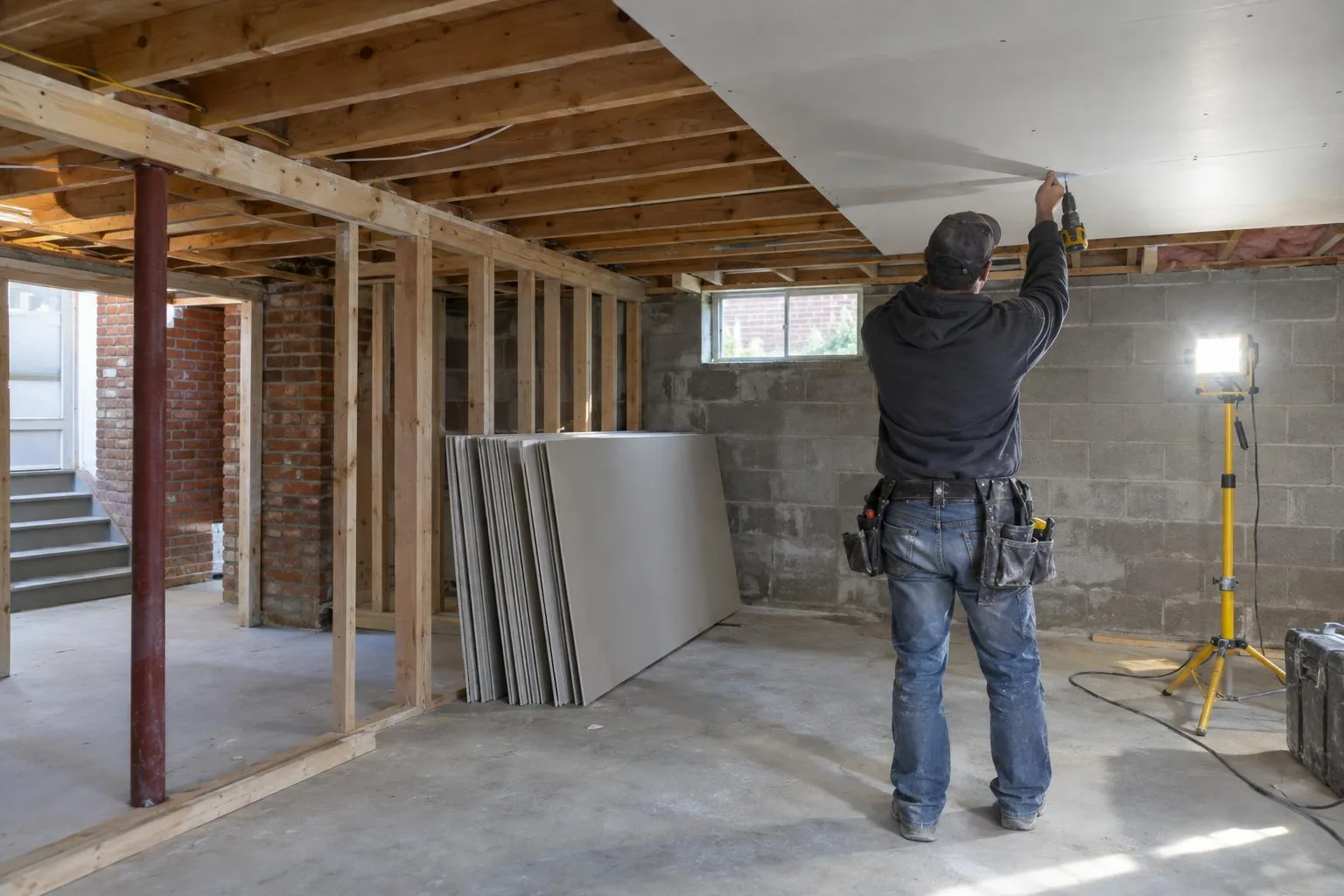
Bare studs in a new addition, a finished basement or a gutted kitchen need board before anything else can happen. We hang ceilings first, then walls, set every screw flush and tape each seam. A single room is a 2 to 3 day job from first sheet to sanded surface. Doors, windows and outlets are counted on the estimate, along with the board type, so the price follows the room. Whole-house new construction is hung the same way, one room after another, with the same finish level carried through.
A doorknob hole, a crack above a window or a row of popped nails starts the same way. We cut back to solid board, add backing where the hole needs it and fill in layers. The edges are feathered wide so the patch vanishes under paint. Mud needs time to dry, so a repair is a few short visits spread over several days. Last comes the texture, copied from the surrounding wall: smooth, orange peel or knockdown. A crack caught early stays a small repair.
Shops, offices and restaurants need partitions, soffits and ceilings built to the plans, and walls that are finished before the painters show up. Type X fire-rated board goes on rated assemblies, and we both hang it and finish it, with each job written up as a bid. The number depends on square footage, how many partitions there are, the ceiling grid and when inspectors can visit. Finishing is timed so the painters can start on the day they are booked, and the dust stays inside the space being worked. The bid also covers how the work is staged around other trades.

Drywall Finishing
Paint shows every flaw in the taping underneath it. A Level 4 finish is the standard for most rooms: fasteners get three coats, angles one and flat seams two, and flat paint or a light texture goes on top. Level 5 goes further and skims the entire surface, which suits gloss paint, dark colors and walls with window light raking across them. Your estimate states the level, so there is nothing to guess about the finish you will get. Most bedrooms and hallways need Level 4, and Level 5 is saved for the walls where light or color would expose a flaw.
Popcorn Ceiling Removal
Roughly half of Bristol's houses went up before 1970, and popcorn texture shows up on ceilings from the decades before the 1990s. The 1973 ban on asbestos in this texture did not clear every ceiling, since some went up as late as the early 1990s, so the ceiling is tested before it is scraped. A clean result means scraping, surface repair and a smooth or knockdown finish. A positive result goes to an abatement firm, since we do not perform abatement, and we come back to repair the surface once the firm has cleared the ceiling.
Water Damage Drywall Repair
After the plumber or roofer has stopped the leak and the framing is dry, we cut out the ruined board and install new. A stain that returns after drying, bubbling, warping, sagging, a musty smell or soft spots all mean the board is finished. A moisture meter confirms the framing is dry before the new sheet closes the wall. Water extraction and mold work are other trades, and we never hang over an active leak. New board is moisture-resistant where the room stays damp.